For small business owners and HR managers, the hiring process can feel like a constant battle against limited time, disorganized spreadsheets, and a flood of applications. Juggling candidate communication, scheduling interviews, and tracking progress manually is not just inefficient; it’s a recipe for losing top talent to faster-moving competitors. This is where dedicated recruiting software for small business becomes an essential tool, not a luxury. These platforms automate repetitive tasks, centralize candidate data, and create a professional, streamlined experience for both your team and your applicants.
This guide eliminates the guesswork by providing a detailed roundup of the best options available in 2026. We’ll dive into a curated list of tools, from comprehensive Applicant Tracking Systems (ATS) to specialized platforms that enhance specific parts of your hiring funnel. To fully understand the foundational technology behind modern hiring, delve into this ultimate guide to Applicant Tracking Systems for small companies.
Each review in our list includes practical use cases, clear pros and cons, pricing insights, and direct links so you can evaluate the right fit for your budget and growth stage. We also highlight innovative solutions like Formbot, which uses conversational forms to significantly boost application completion rates by making the initial interaction more engaging for candidates. Let's find the software that will transform your hiring workflow.
1. Formbot
Formbot redefines the initial touchpoint of the hiring process: the job application. It stands out by transforming static, often tedious application forms into dynamic, conversational experiences. Instead of relying on traditional web forms that can feel impersonal and cumbersome, Formbot leverages an AI-powered, no-code platform to build engaging interactions. This approach is specifically designed to combat application abandonment, a common challenge for small businesses competing for talent.
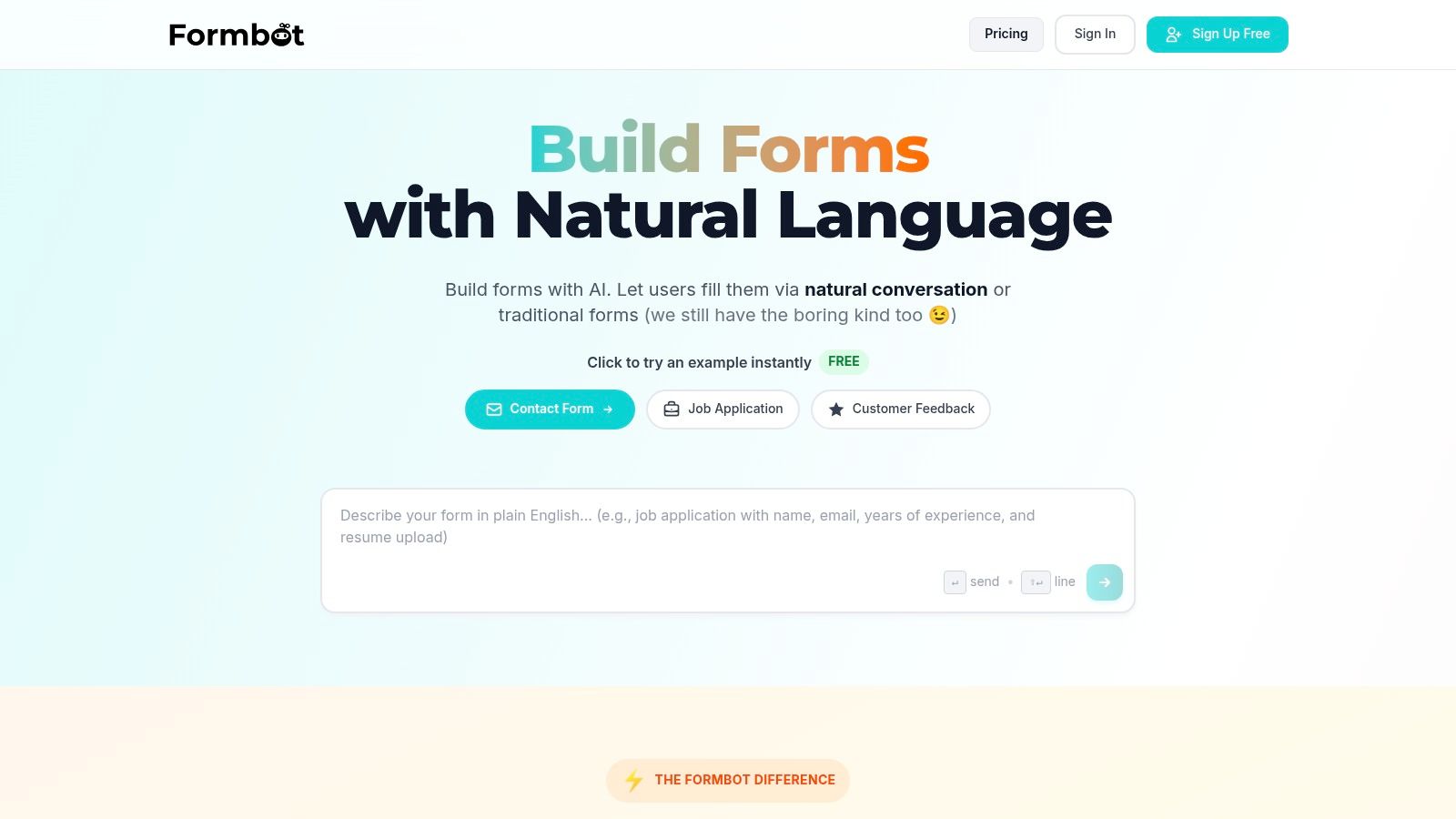
The platform’s core strength is its ability to generate a fully functional form from a simple plain-English prompt. Recruiters can choose from a modern chat interface, a guided one-question-at-a-time flow, or a traditional form layout, ensuring the application experience aligns with their company brand and candidate expectations. This flexibility is a significant advantage, particularly for creating mobile-friendly applications that meet candidates where they are. According to the vendor, this conversational method can lead to up to 2.5x higher completion rates.
Key Features & Use Case
For small businesses, this tool is ideal for creating a more human-centric initial screening process without needing a developer. You can start with a pre-built job application form template and customize it instantly. The AI understands natural language, intelligently extracts answers from a candidate's response, and only asks for information that is still missing, which speeds up the process significantly.
- Best For: Small businesses looking to dramatically improve application conversion rates and provide a modern, engaging candidate experience.
- Pricing: A free plan is available for up to 100 submissions per month. Paid plans for 2026 start at $49/month for the "Pro" tier, which includes 1,000 monthly submissions and advanced features.
| Pros | Cons |
|---|---|
| AI-powered form creation from plain English prompts | Enterprise-grade features may require vendor confirmation |
| Flexible UX modes (chat, guided, traditional) | Advanced integrations are not explicitly detailed |
| Vendor reports significantly higher completion rates | |
| Ready-to-use templates and robust customization |
2. Workable
Workable is an all-in-one recruiting and HR platform designed to grow with your company, making it a strong contender for small businesses with an eye on expansion. Its core value proposition lies in combining a powerful applicant tracking system (ATS) with essential HRIS functions like onboarding and PTO tracking, which helps streamline your tech stack from the very beginning. Unlike some competitors that limit job posts, Workable offers unlimited active jobs on its standard recruiting plans, a major advantage for businesses in a high-growth phase.
This platform excels at automating top-of-funnel activities. With one-click posting to hundreds of job boards and built-in sourcing tools, it helps fill your pipeline faster.
Key Features & Considerations
- Best For: Businesses wanting a unified ATS and HRIS solution that scales with headcount.
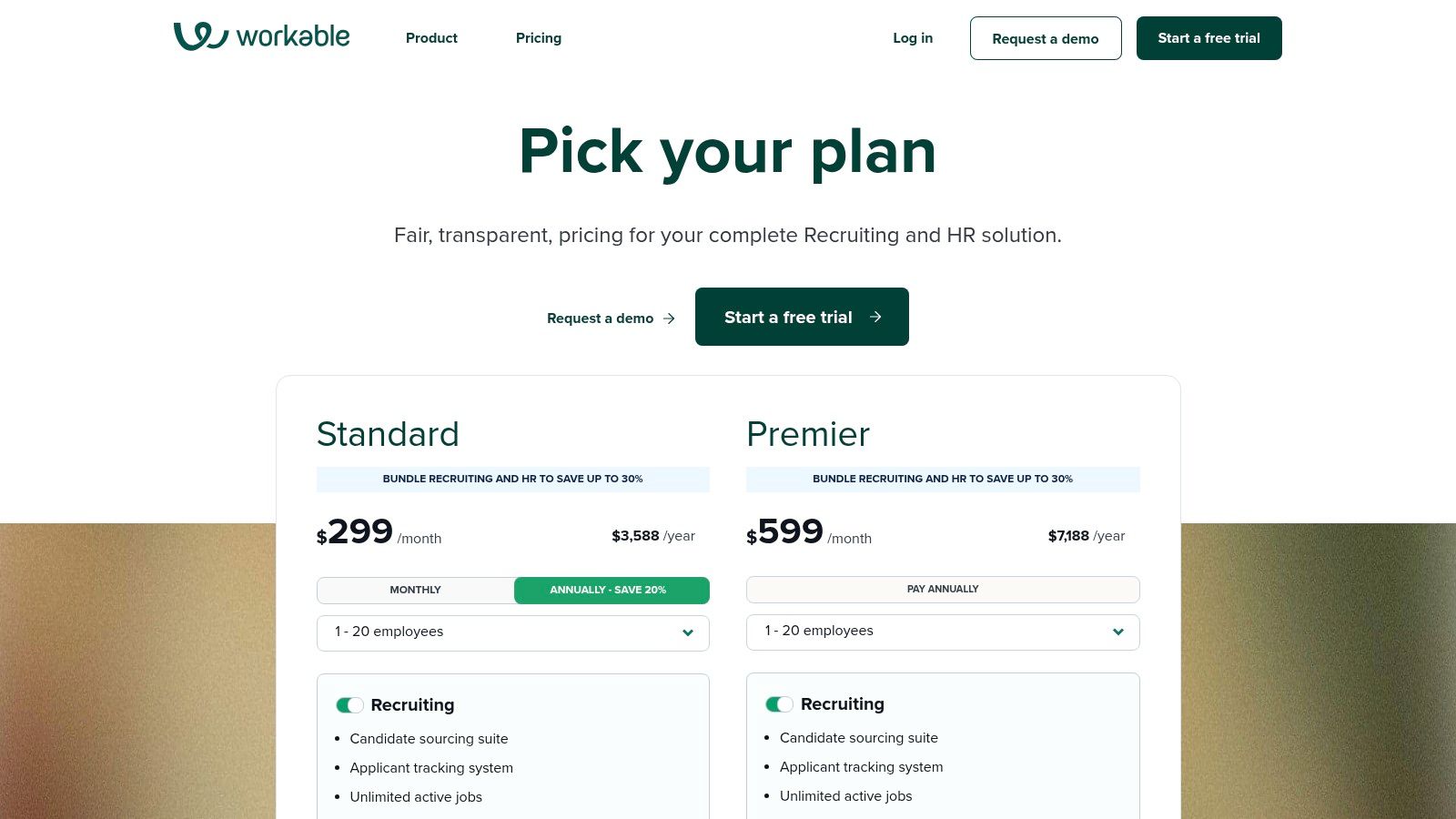
- Pricing: Workable uses a transparent plan configurator based on your current number of employees. This is great for planning, but the smallest teams might pay for capacity they don't yet need.
- Pros: The bundled recruiting and HR tools simplify vendor management, and its robust add-on marketplace (for video interviews, assessments, etc.) allows for deep customization.
- Cons: Key features like texting and video interviews are priced as add-ons, which can increase the total cost.
- Website: https://www.workable.com/pricing
3. JazzHR
JazzHR is an applicant tracking system built from the ground up for small and midsize businesses. It shines as a first-time ATS for teams moving away from spreadsheets, offering a user-friendly interface that prioritizes quick setup and intuitive navigation. Its core strength lies in providing essential recruiting tools like customizable hiring workflows, centralized team collaboration, and offer letter management without the complexity of enterprise-level software. This makes it an excellent piece of recruiting software for small businesses needing a practical, efficient solution.
The platform focuses on core hiring activities, with features designed to improve collaboration and speed up the process. Teams can leave comments, rate candidates, and track progress within a shared space, while automations for tasks like interview scheduling and candidate communication help save valuable time. For businesses looking to enhance their candidate experience, pairing this with an automated job application system can further streamline the top of the funnel.
Key Features & Considerations
- Best For: Small or midsize businesses deploying their first dedicated ATS and prioritizing ease of use and quick implementation.
- Pricing: JazzHR’s pricing is primarily quote-based and requires contacting their sales team. This model can be less transparent for businesses trying to budget quickly.
- Pros: The system is purpose-built for the SMB market, making it highly intuitive. Its flexible workflows and e-signature support for offer letters are significant time-savers.
- Cons: Limited public pricing details can be a hurdle. Advanced features like texting and in-depth analytics may require higher-tier plans or add-ons.
- Website: https://www.jazzhr.com
4. Breezy HR
Breezy HR positions itself as one of the most user-friendly and visually intuitive recruiting software for small business, emphasizing simplicity without sacrificing power. A key differentiator is its inclusion of unlimited users and candidates across all paid plans, making it ideal for collaborative hiring teams that don't want to be penalized for growth. Its clean, drag-and-drop pipeline interface makes managing candidates feel less like a chore and more like a strategic process.
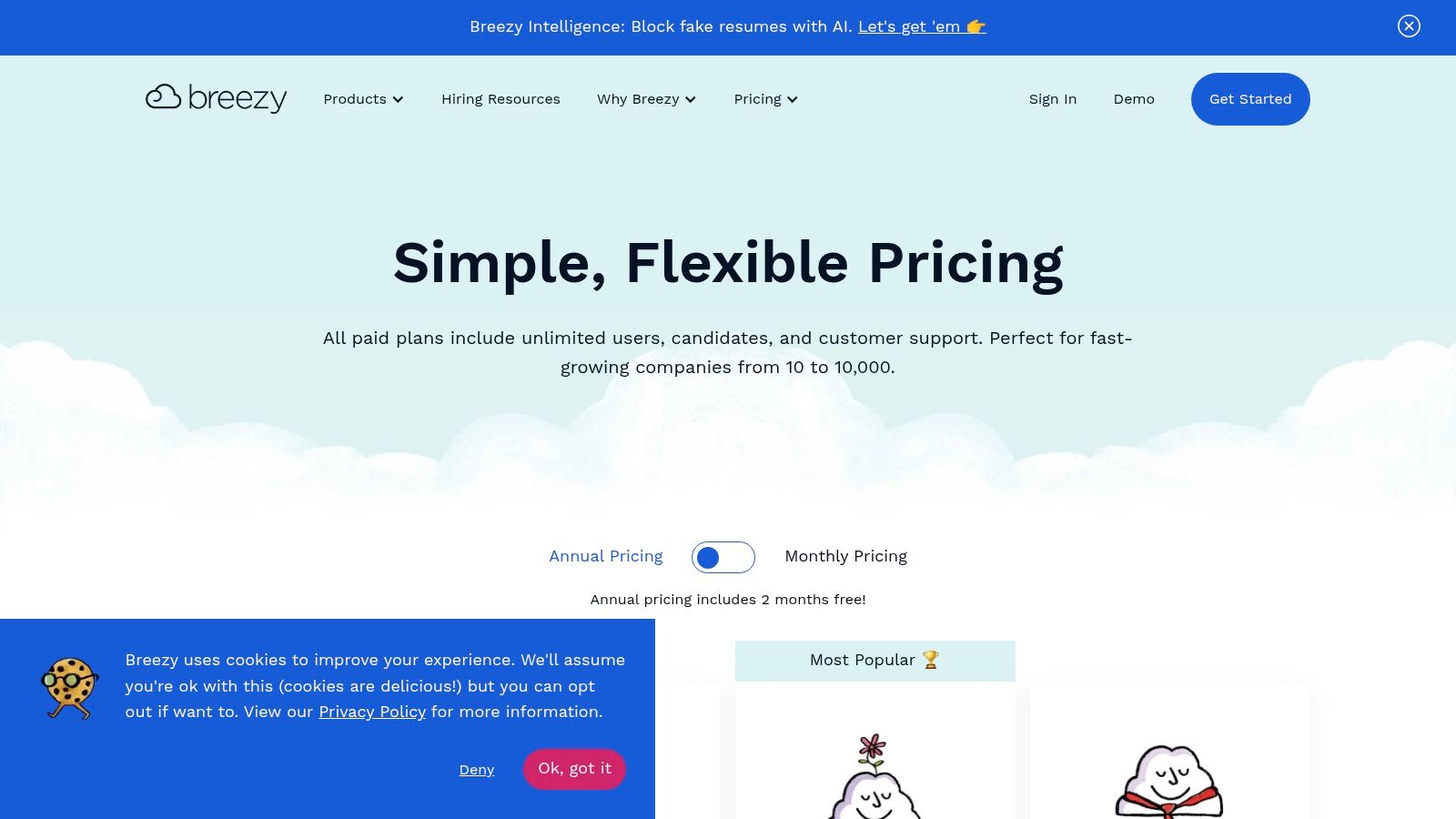
The platform is built for speed, from multi-board job posting to automated candidate scheduling, helping teams reclaim valuable time. The optional onboarding module also provides a seamless way to transition from candidate to new hire within the same system.
Key Features & Considerations
- Best For: Small to mid-sized businesses that need a simple, affordable, and highly collaborative ATS with a strong visual interface.
- Pricing: Breezy offers a forever-free "Bootstrap" plan for one active position. Paid plans have clear, published pricing that unlocks unlimited jobs and users, with certain features like SMS and AI costing extra.
- Pros: The free tier is a huge benefit for companies with occasional hiring needs. Unlimited users on paid plans and a great mobile experience support team-based recruiting.
- Cons: The free plan is limited to a single job posting, and key features like texting or advanced AI summaries require add-on purchases or credits, which can increase the overall cost.
- Website: https://breezy.hr/pricing
5. Zoho Recruit
Zoho Recruit is a versatile Applicant Tracking System that stands out for its flexibility and deep integration within the broader Zoho business ecosystem. It uniquely offers separate, tailored editions for both in-house corporate HR teams and external staffing agencies, allowing small businesses to choose the feature set that precisely matches their operational model. This makes it an excellent piece of recruiting software for a small business that may also use other Zoho products like CRM or Books.
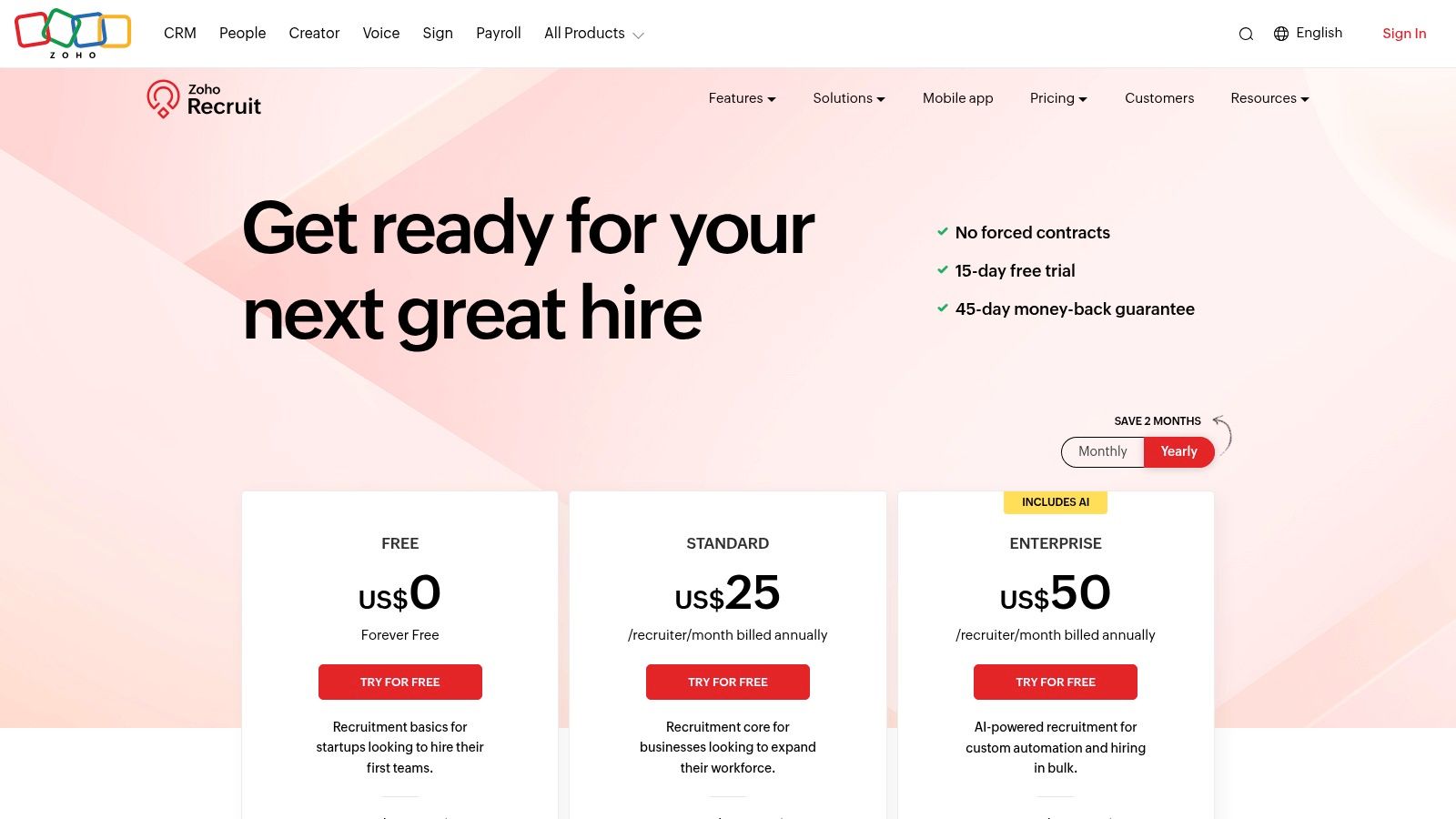
The platform provides a clear growth path, starting with a free-forever plan and scaling up to enterprise-level tiers with advanced automation and analytics. Its core functions, like resume parsing and job board distribution, help streamline essential hiring tasks from day one.
Key Features & Considerations
- Best For: Small businesses already invested in the Zoho ecosystem or those needing a highly flexible, cost-effective ATS with a free entry point.
- Pricing: Offers a free plan for a single recruiter. Paid plans are billed per user, per month, with options for premium support and paid "Jumpstart" implementation services for a guided setup.
- Pros: The generous free plan is great for startups, and its deep integration with other Zoho apps creates a powerful, unified business suite. The separate editions for HR and agencies provide focused functionality.
- Cons: Advanced features like AI-powered candidate matching are reserved for higher-priced tiers, and public pricing pages can vary by region, which may cause some confusion.
- Website: https://www.zoho.com/recruit/pricing.html
6. Recruitee
Recruitee is a modern applicant tracking system (ATS) designed for small and medium-sized businesses focused on scaling their teams collaboratively. Its standout feature is the emphasis on employer branding, providing tools like a drag-and-drop careers site builder that empowers even small HR teams to create a professional hiring hub. This makes it an excellent piece of recruiting software for small businesses that want to own their candidate experience from the first touchpoint.
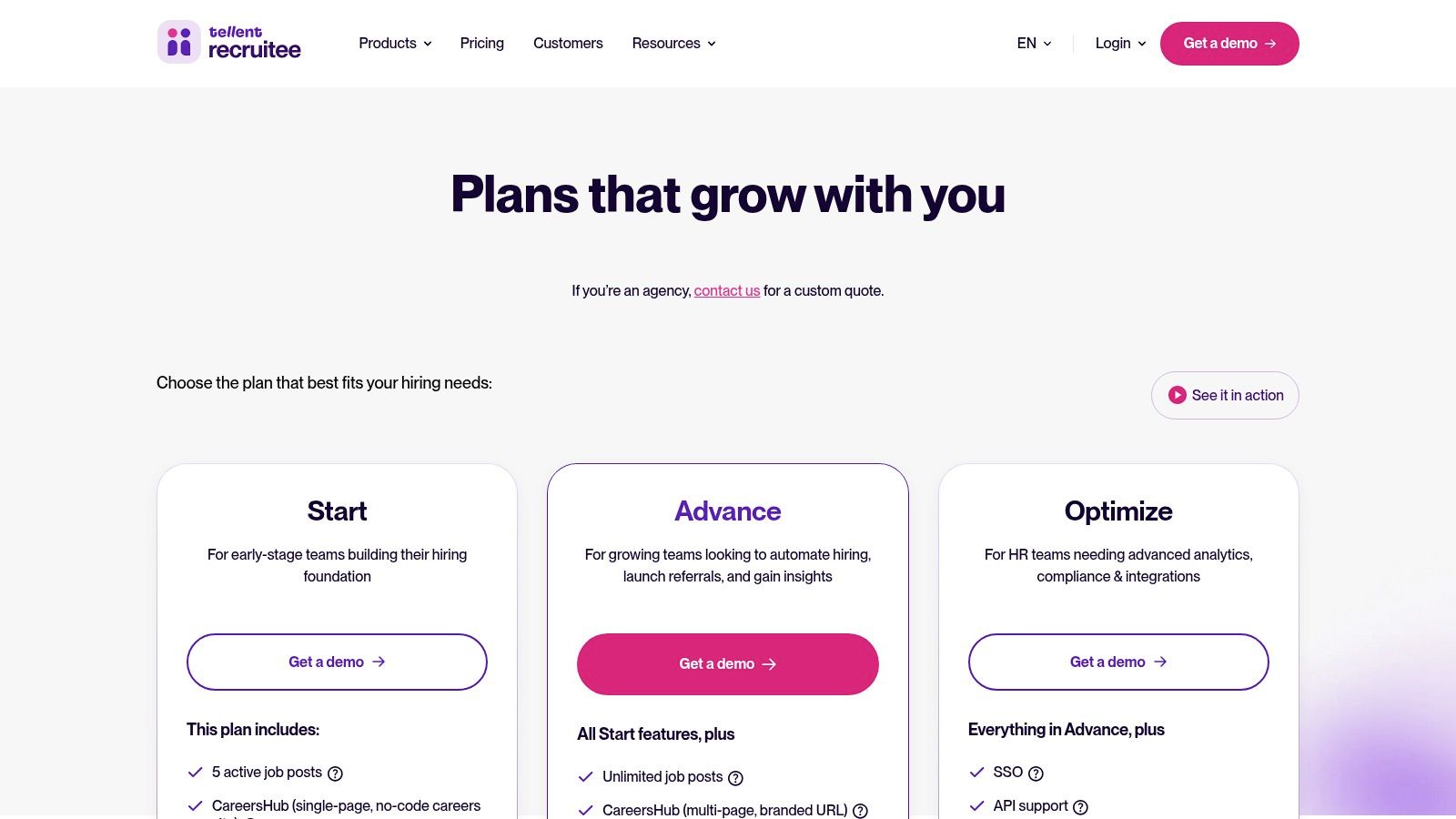
The platform is built for teamwork, with features that facilitate easy communication and feedback among hiring managers and interviewers. It balances powerful automation capabilities, like candidate self-scheduling, with a clean, intuitive user interface that doesn't overwhelm smaller teams who may be adopting an ATS for the first time.
Key Features & Considerations
- Best For: Scaling SMBs that prioritize employer branding and collaborative hiring workflows.
- Pricing: Tiered plans are based on active job slots, with an "Advance" plan for unlimited roles. Pricing is listed in euros, so US-based businesses will need to account for conversion or request a specific quote.
- Pros: The built-in careers hub builder is a significant advantage for employer branding. Live chat support and a marketplace of over 200 integrations provide strong flexibility and assistance.
- Cons: An annual commitment is standard, which can be a hurdle for some small businesses. Features like texting are available only as paid add-ons.
- Website: https://recruitee.com/pricing
7. Manatal
Manatal stands out by making AI-powered recruiting accessible and affordable, specifically for small businesses and recruitment agencies. Its core strength is leveraging artificial intelligence to streamline sourcing and candidate matching, automating tasks that typically require significant manual effort. The platform enriches candidate profiles with social media data and provides AI recommendations, helping you quickly identify the best fits from your talent pool.
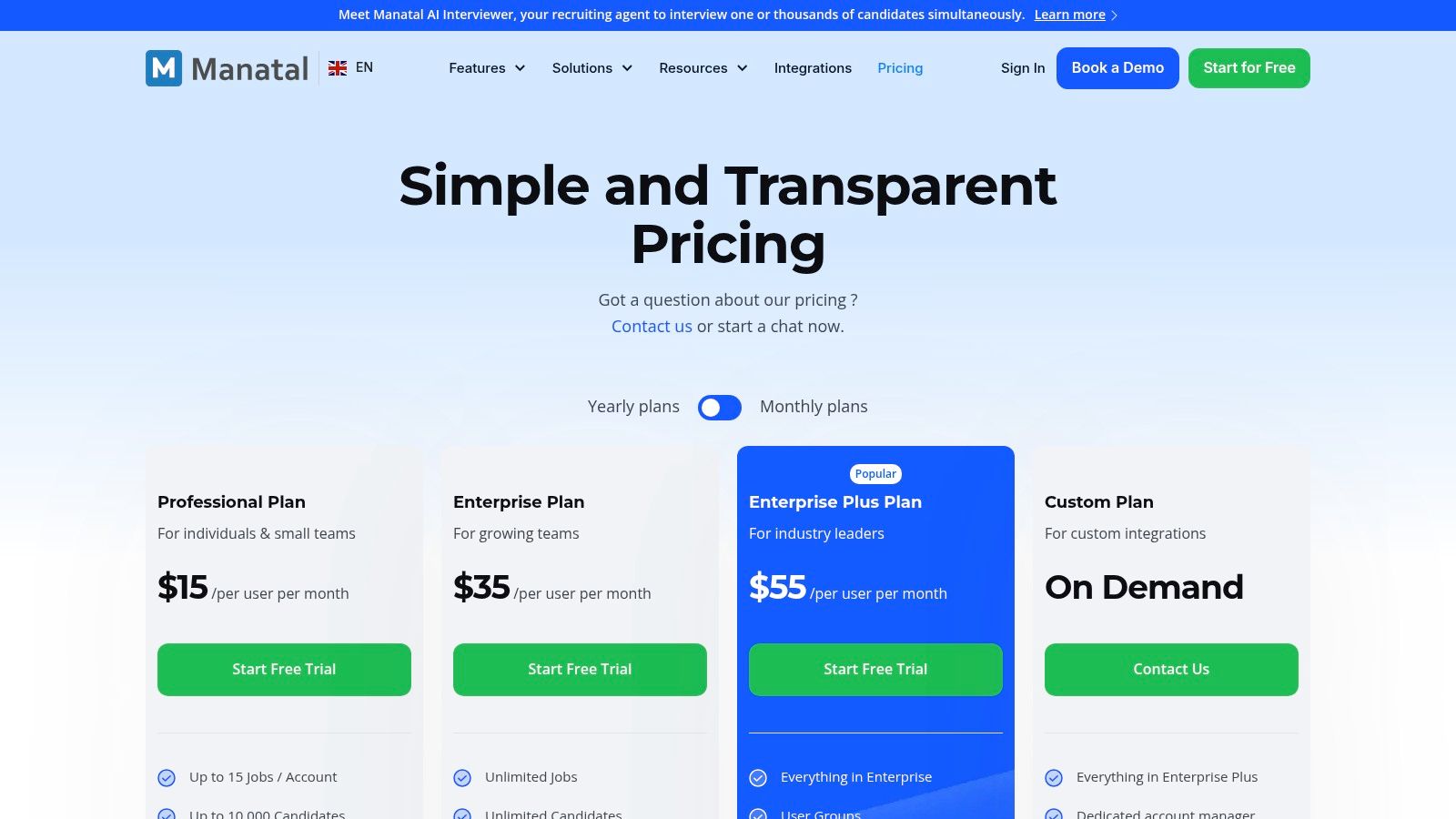
This focus on intelligent automation makes it a powerful piece of recruiting software for small business teams aiming to punch above their weight. With features like a Chrome sourcing extension and customizable pipeline automation, Manatal helps small teams build a sophisticated hiring process without a hefty price tag or complex setup.
Key Features & Considerations
- Best For: Small teams and agencies that want to leverage AI for candidate sourcing and matching at a low entry cost.
- Pricing: Offers a transparent, per-user per-month model starting at a very competitive price point. A 14-day free trial is available without a credit card.
- Pros: The low starting price and powerful AI-driven features provide excellent value. It supports unlimited jobs and candidates on its higher-tier plans, allowing for significant scaling.
- Cons: The per-user pricing can become costly as your recruiting team grows. Advanced features like single sign-on (SSO) and API access are gated behind the most expensive Enterprise Plus plan.
- Website: https://www.manatal.com/pricing
8. BambooHR (ATS included)
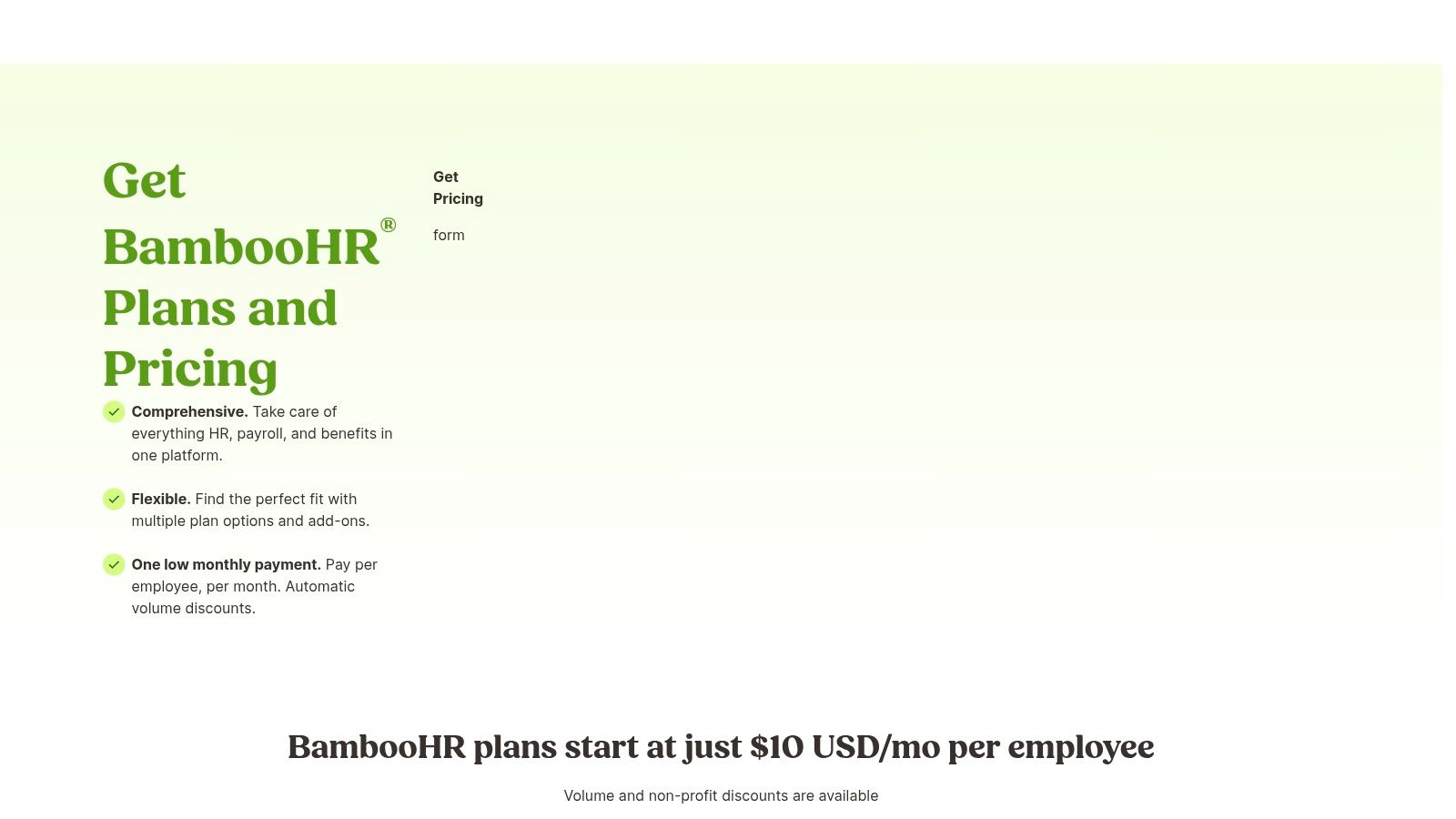
BambooHR is a comprehensive HR platform where the applicant tracking system (ATS) is seamlessly integrated into a broader human resources suite. This makes it an ideal choice for small businesses that prioritize a smooth, unified workflow from candidate to employee. Rather than just offering standalone recruiting software for small business, BambooHR's Advantage package bundles hiring tools with core HR functions like employee records, onboarding, and time-off tracking, ensuring a single source of truth for all people data.
The platform is designed for simplicity, allowing non-technical teams to manage job postings, candidate communications, and offer letters with ease. Its core strength is the clean handoff process: once a candidate is hired, their data automatically populates a new employee record, streamlining the onboarding experience and reducing administrative work.
Key Features & Considerations
- Best For: Businesses wanting an all-in-one HR system where recruiting is the first step in a complete employee lifecycle.
- Pricing: Pricing is customized and provided via a sales quote; only starting points are published on their website.
- Pros: The smooth transition from candidate to employee record is a major time-saver. Its strong onboarding capabilities and large integration marketplace allow for future expansion as your needs evolve.
- Cons: The built-in ATS may lack the advanced feature depth of leading standalone recruiting platforms.
- Website: https://www.bamboohr.com/pricing
9. Indeed for Employers
As the largest job site in the U.S., Indeed for Employers offers unparalleled reach, making it an essential tool for small businesses needing to fill their applicant pipeline quickly. It functions as both a massive job board and a lightweight applicant tracking system (ATS), allowing you to post jobs, manage candidates, and communicate directly from its dashboard. This dual functionality is ideal for SMBs that need a simple, centralized solution before committing to more complex recruiting software for small business.
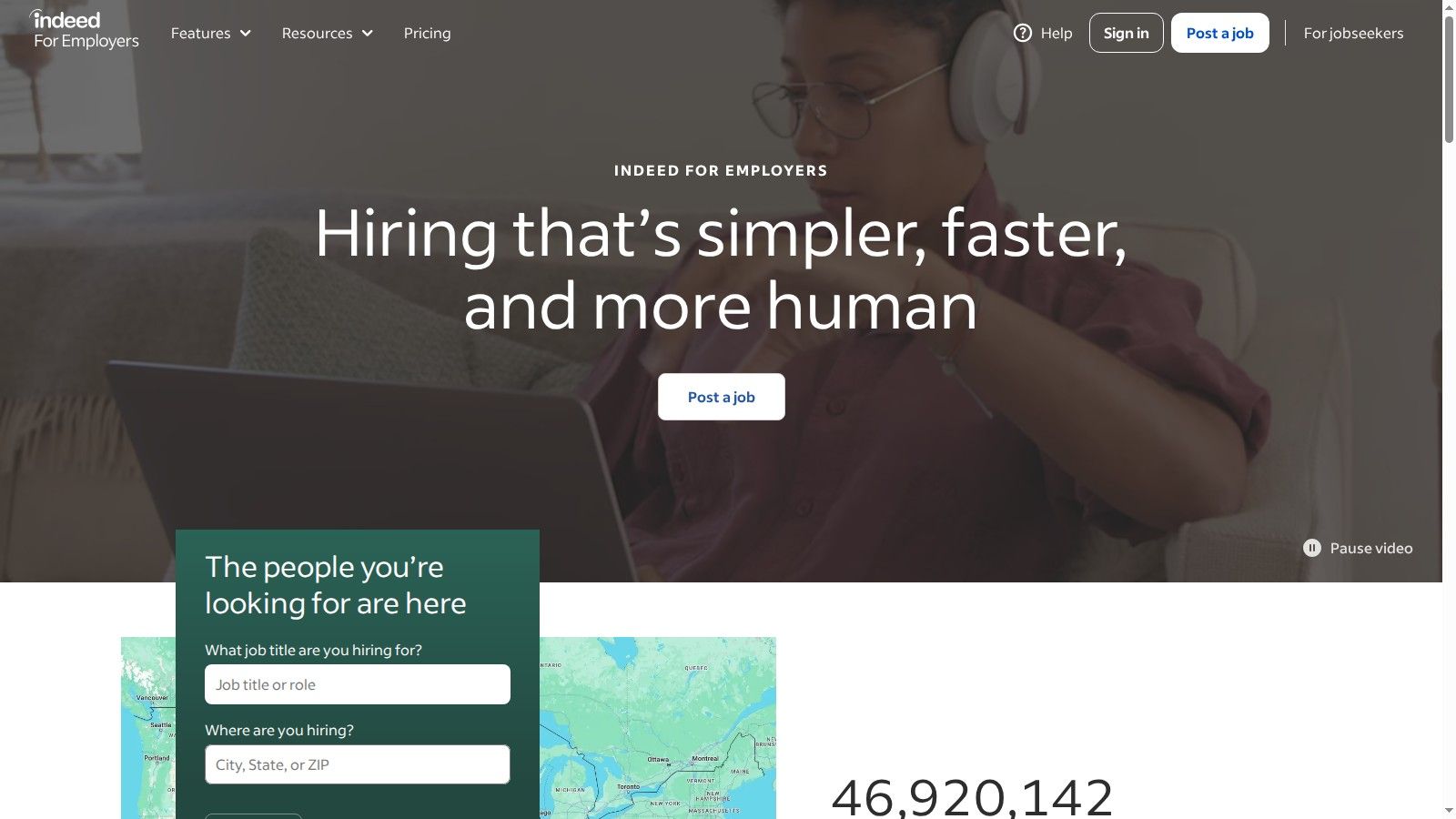
The platform’s core strength is its flexible, pay-for-performance model. You can post for free to get initial visibility or use Sponsored Jobs with a pay-per-click or pay-per-started-application budget to attract more candidates, giving you total control over spending.
Key Features & Considerations
- Best For: Small businesses needing maximum candidate reach and flexible, pay-as-you-go advertising budgets.
- Pricing: Offers free job postings with limited visibility and sponsored options where you set a daily or monthly budget. Costs vary significantly based on role, location, and competition.
- Pros: Access to a massive US audience ensures a steady flow of applicants for most roles, and the ability to pause campaigns at any time offers great budget flexibility. It also integrates with most major ATS platforms.
- Cons: Free posts lose visibility quickly and can get buried. The sheer volume of applicants can be overwhelming, and advertising costs can fluctuate unpredictably.
- Website: https://www.indeed.com/hire
10. LinkedIn Recruiter Lite
LinkedIn Recruiter Lite is less of a full applicant tracking system and more of a specialized sourcing tool that gives small businesses direct access to the world's largest professional network. It’s designed for low-volume, self-serve recruiting, allowing you to proactively find and message candidates for hard-to-fill roles. This platform is ideal when your primary challenge is outbound sourcing, and it can be paired with any ATS to manage the application workflow.
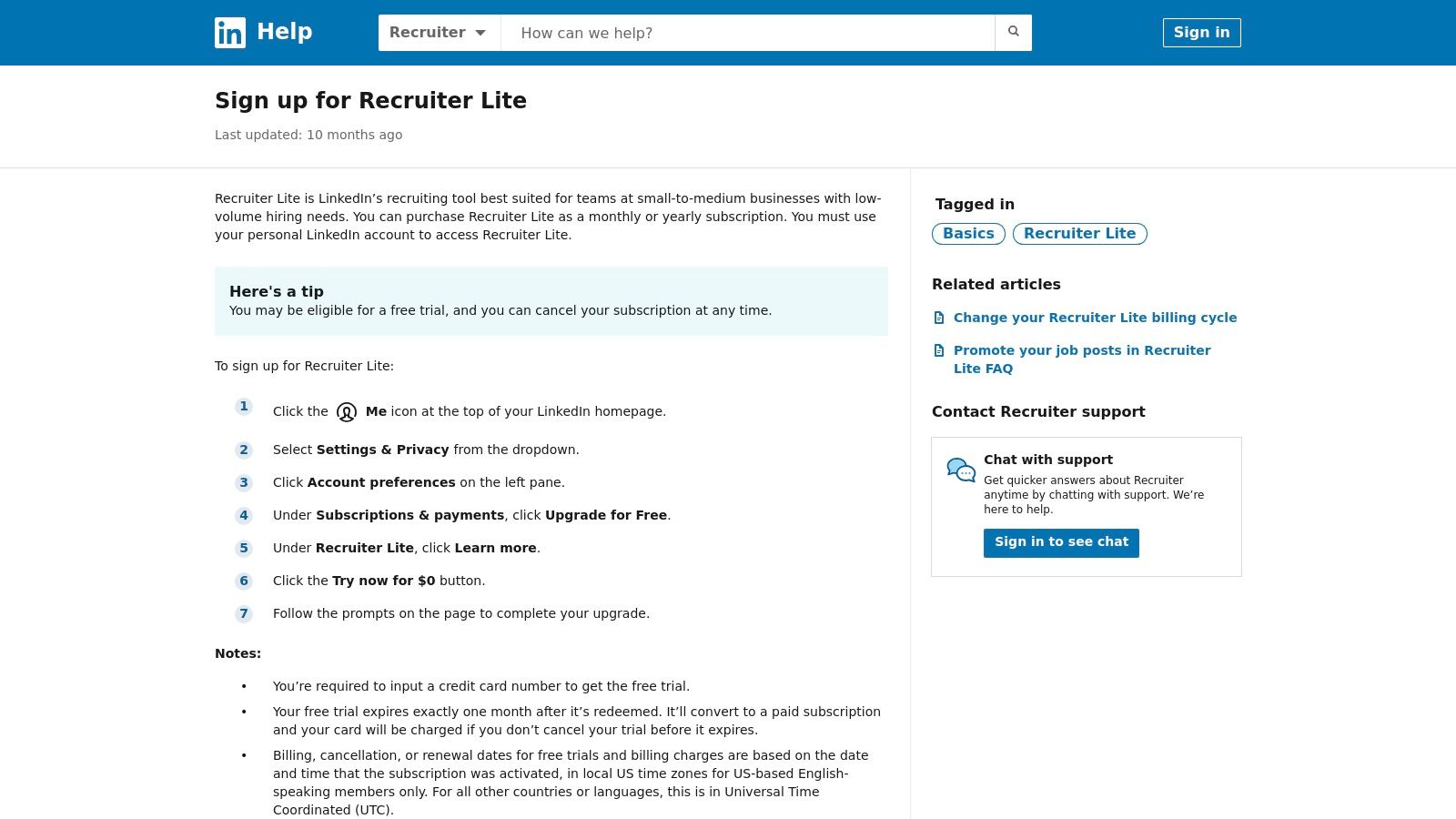
The platform excels at targeted outreach. With advanced search filters and a dedicated allotment of InMail messages, you can connect directly with passive talent, building a pipeline faster than relying solely on job postings. This direct communication is a key part of the candidate experience best practices that can set your small business apart.
Key Features & Considerations
- Best For: Businesses that need to supplement their inbound applications with targeted, outbound sourcing for specific roles.
- Pricing: Offered as a monthly or annual subscription per user seat, with pricing available upon inquiry.
- Pros: Direct access to LinkedIn’s professional network is unmatched, and it's excellent for building a pipeline for niche or senior positions. It integrates with your existing ATS for candidate intake.
- Cons: It's not a full ATS, so you will still need another system for workflow management. The per-seat cost can become expensive if multiple team members need access.
- Website: https://www.linkedin.com/help/recruiter/answer/a6807901
11. GetApp (Small Business Recruiting/ATS listings)
GetApp isn't a direct provider of recruiting software but rather a comprehensive discovery platform where you can compare options. It excels at helping small businesses quickly survey the market with curated directories and verified user reviews. Its strength lies in its powerful filtering tools, allowing you to narrow down the vast landscape of applicant tracking systems to only those that specifically cater to small business needs, feature sets, and budgets. This approach saves significant research time and helps uncover lesser-known but highly effective tools.
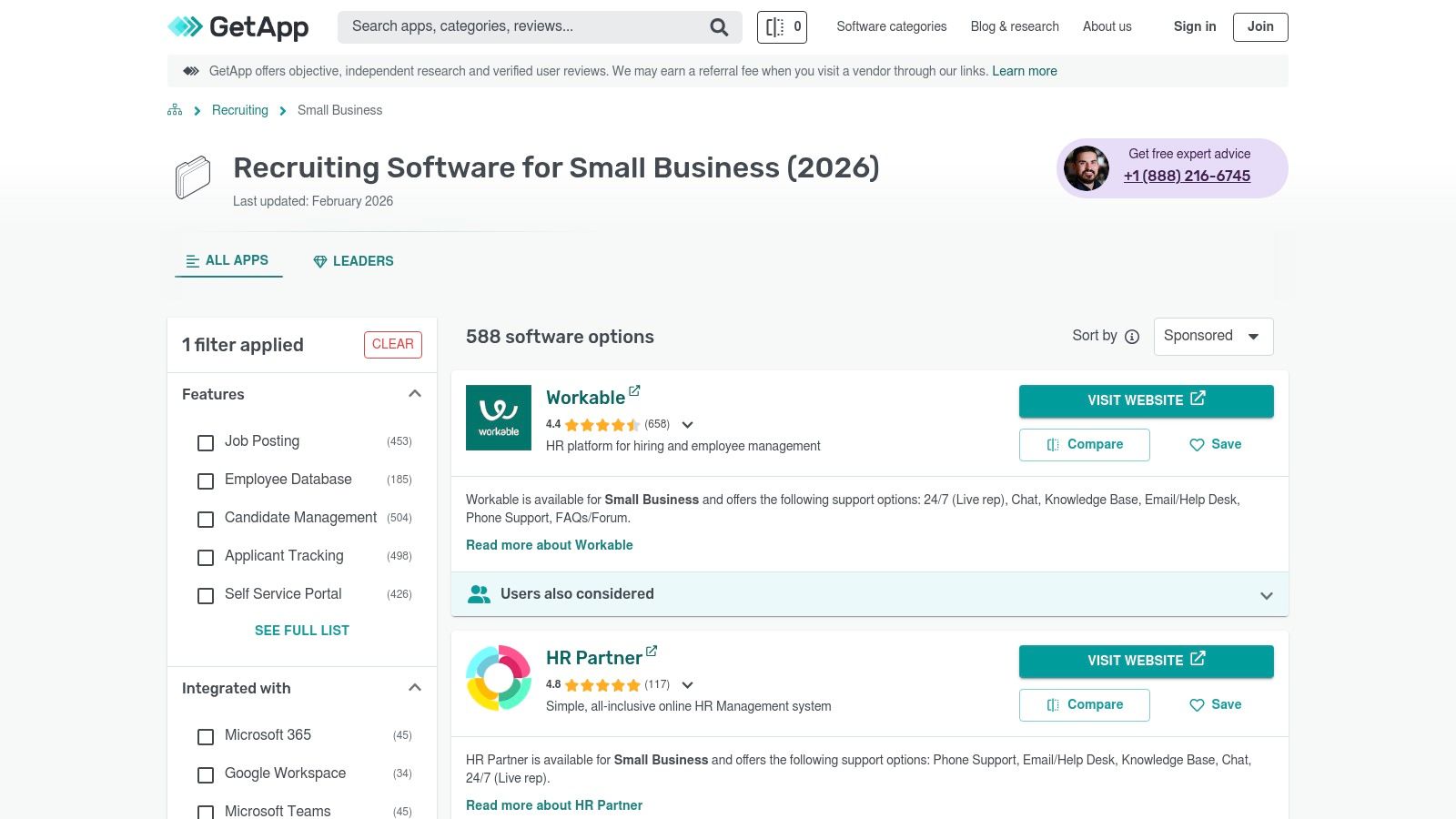
By aggregating user sentiment and feature summaries, GetApp provides a solid starting point for building a vendor shortlist. You can easily compare top-rated solutions, read about real user experiences, and click through to vendor sites for demos or trials.
Key Features & Considerations
- Best For: Small businesses in the initial research phase needing to quickly discover and shortlist relevant recruiting software options.
- Pricing: Free to use for research and comparison. You must navigate to the vendor's website to purchase any software you discover.
- Pros: Allows for a fast market scan to find options beyond the usual suspects. Up-to-date user reviews provide valuable competitive context and real-world insights.
- Cons: It's a directory, not a direct seller. Listings can sometimes favor paid placements, so it's crucial to verify all details directly on vendor pages.
- Website: https://www.getapp.com/hr-employee-management-software/recruitment/org/small-business/
12. Capterra (Small Business Applicant Tracking category)
While not a direct software provider, Capterra’s dedicated category for small business applicant tracking systems is an invaluable first stop in your research process. Think of it as a comprehensive digital catalog where you can compare dozens of options side-by-side, making it an essential tool for creating your initial longlist. Its strength lies in the robust filtering system, which lets you narrow down the vast market by specific features, pricing models, and integrations to find the right recruiting software for your small business.
This platform excels at providing context. Instead of visiting twenty different vendor sites, you can quickly evaluate core offerings, read verified user reviews, and view screenshots all in one place.
Key Features & Considerations
- Best For: Businesses in the early discovery phase needing to understand the market and create a shortlist of potential vendors.
- Pricing: Free to use for research. Capterra lists pricing information provided by vendors, but it's crucial to verify the details directly on the vendor's site.
- Pros: The sheer breadth of listed software is unmatched, and its user reviews provide authentic insights into the user experience. It's a great starting point for vendor discovery.
- Cons: The volume of options can be overwhelming if you don't use the filters effectively. Also, pricing and feature data may not always be up-to-date.
- Website: https://www.capterra.com/applicant-tracking-software/s/small-businesses/
Top 12 Small-Business Recruiting Software Comparison
| Product | Core features | UX & Conversion | Price & Value | Target audience | Notable USP |
|---|---|---|---|---|---|
| 🏆 Formbot | AI no-code form generation; chat/guided/traditional modes; 100+ templates; real-time analytics | ★★★★☆ — up to 2.5x completion; 40% faster submissions (mobile) | 💰 Free tier; scalable paid plans (vendor) | 👥 Marketing, Product/UX, HR, CX teams, SMBs | ✨ AI plain-English form build; conversational UX; instant share links |
| Workable | ATS + HR suite; unlimited jobs on core plans; sourcing & add-ons | ★★★★☆ — robust sourcing + HR flow | 💰 Headcount-based pricing; transparent configurator; add-ons extra | 👥 Growing teams needing bundled ATS+HR | ✨ One-click job posting; integrated onboarding |
| JazzHR | SMB-focused ATS; custom pipelines, automation, e-docs | ★★★★☆ — intuitive, fast setup for first ATS | 💰 Sales-led pricing; SMB-oriented value | 👥 Small/midsize businesses adopting ATS | ✨ Easy-to-configure workflows; team collaboration |
| Breezy HR | ATS with career site, video interviews, unlimited users (paid) | ★★★★☆ — clear UI; strong automation | 💰 Published pricing; forever-free (1 job) | 👥 Very small teams to SMBs | ✨ Built-in video interviews; onboarding add-on |
| Zoho Recruit | Editions for corporate vs. agencies; parsing & marketplace | ★★★★☆ — flexible but tiered complexity | 💰 Free option; regional pricing/tiers vary | 👥 Teams wanting Zoho ecosystem or agencies | ✨ Multiple editions + deep integrations & Jumpstart |
| Recruitee | Careers site builder; multi-board posting; 200+ integrations | ★★★★☆ — great employer-branding tools | 💰 Tiered plans (EUR); annual commits common | 👥 Scaling SMBs focused on employer brand | ✨ Careers hub + extensive integrations |
| Manatal | AI recommendations; LinkedIn sourcing; resume enrichment | ★★★★☆ — AI-driven sourcing at low cost | 💰 Transparent low starting price; per-user model | 👥 Small teams seeking AI candidate matching | ✨ AI candidate recommendations & enrichment |
| BambooHR (ATS incl.) | HR platform with built-in ATS; onboarding; time-off | ★★★★☆ — smooth candidate→employee handoff | 💰 Sales-based pricing; bundled HR value | 👥 Companies wanting integrated HR + recruiting | ✨ Tight HR-ATS integration; strong onboarding |
| Indeed for Employers | Job board with Sponsored Jobs; PPC/PPSA options | ★★★☆☆ — high volume; cost & quality vary | 💰 Pay-per-performance; free posts limited | 👥 SMBs needing broad reach & quick flow | ✨ Largest US audience; flexible spend control |
| LinkedIn Recruiter Lite | In-network search, InMail, saved projects | ★★★★☆ — excellent targeted outbound sourcing | 💰 Per-seat subscription; cost scales | 👥 Recruiters doing proactive sourcing | ✨ Direct access to LinkedIn professional graph |
| GetApp (directory) | Filtered listings, reviews, vendor links | ★★★★☆ — fast discovery & comparison | 💰 Free to browse; purchase via vendors | 👥 Small-business buyers researching options | ✨ Curated small-business views & verified reviews |
| Capterra (directory) | Marketplace, filters, buying guides, vendor profiles | ★★★★☆ — broad coverage for early discovery | 💰 Free; links to trials & vendor quotes | 👥 Early-stage buyers creating longlists | ✨ Largest ATS marketplace + editorial guides |
Making Your Final Decision: It's About More Than Just Features
Choosing the right recruiting software for your small business is a significant step, one that moves beyond simply comparing feature lists. As we've explored with tools ranging from comprehensive Applicant Tracking Systems (ATS) like Workable and JazzHR to specialized platforms like LinkedIn Recruiter Lite, the best solution is the one that aligns with your specific hiring reality. It's not about finding the software with the most capabilities; it's about identifying the one with the right capabilities for your team, your budget, and your growth trajectory.
This guide has provided a detailed look at the landscape in 2026, from all-in-one HR suites like BambooHR to powerful AI-driven platforms like Manatal. The key takeaway is that your unique needs should steer your decision. A five-person startup has fundamentally different requirements than a 50-person company poised for rapid expansion. Your choice will shape not just your efficiency but also the experience you offer to potential hires.
Key Takeaways for Your Selection Process
Before you commit, reflect on the core themes we've discussed. Your ideal recruiting software for a small business will be a strategic partner, not just a digital filing cabinet.
- Candidate Experience is Paramount: How a candidate applies is their first real interaction with your company culture. A clunky, impersonal application process can deter top talent. Tools that prioritize a smooth, engaging experience, like the conversational forms offered by Formbot, give you a competitive edge.
- Scalability Matters: The tool that's perfect today might be restrictive tomorrow. Consider platforms that offer tiered pricing and feature sets that can grow with you. You don’t want to be forced into a complicated migration process in 12 months because you outgrew your initial choice.
- Integration is Non-Negotiable: Your recruiting software must work well with your existing tools, whether it’s your email, calendar, or HR information system (HRIS). Disconnected systems create manual work and increase the risk of errors, defeating the purpose of adopting new technology.
- Implementation and Adoption are Critical: The most powerful software is useless if your team finds it difficult to use. Prioritize solutions with intuitive interfaces, strong customer support, and clear onboarding resources. Involve your team in the trial process to gauge usability and ensure buy-in from day one.
Actionable Next Steps to Find Your Perfect Fit
Feeling overwhelmed by the options is normal. Break down your final evaluation into these manageable steps:
- Define Your Must-Haves: Create a shortlist of 3-5 non-negotiable features. Is it a robust candidate pipeline, specific job board integrations, or advanced reporting?
- Run a Trial: Never buy without trying. Sign up for free trials for your top 2-3 contenders. Use this time to post a real job, move a test candidate through the workflow, and see how it feels in practice.
- Evaluate the Candidate's View: As part of your trial, apply to your own job posting. Was it easy? Was it mobile-friendly? Did it make you feel valued? This perspective is invaluable.
- Check for Hidden Costs: Look beyond the monthly subscription fee. Are there implementation fees, charges per user, or costs per job posting? Ensure the total cost of ownership is clear.
Ultimately, investing in the right recruiting software is an investment in your company's future. It empowers you to find, attract, and hire the people who will drive your success. The goal is to find a tool that removes administrative burdens, allowing you to focus on what truly matters: building meaningful connections with great candidates.
Ready to dramatically improve the first and most critical step of your hiring process? A powerful ATS is essential, but it can't fix a broken application experience. Formbot transforms standard, tedious job applications into engaging, conversational experiences that boost completion rates and leave candidates with a great first impression. Start building smarter, friendlier forms today at Formbot.